Category Archives: XML Prague

Semantic Profiles

Following my earlier post on semantic documents, I’ve given the subject some thought. In fact, I wrote a paper on a related subject and submitted it to XML Prague for next year’s conference. The paper wasn’t accepted (in all fairness, the paper was off-topic for the themes for the event), but I think the concept is both important and useful.

Briefly, the paper is about profiling XML content. The basics are well known and very frequently used: you profile a node by placing a condition on it. That condition, expressed using an attribute, is then compared to a publishing context defined using a similar condition on the root. If met, the node is included; if not, the node is discarded.

The matching is done with a simple string comparison but the mechanism can be made a lot more advance by, say, imposing Boolean logic on the condition. You need to match something like A AND B AND NOT(C), or the node is discarded. Etc.

The problem is that in the real world, the conditions, the string values, usually represent actual product names or variants, or perhaps an intended reader category. They can be used not only for string matching but for including content inline by using the condition attribute contents as variable text: a product variant, expressed as a string in an attribute in an EMPTY element, can easily be expanded in the resulting publication to provide specific content to personalise the document.

Which is fine and well, until the product variant label or the product itself is changed and the documents need to be updated to reflect this. All kinds of annoyances result, from having to convert values in legacy documents to not being able to do so (because the change is not compatible with the existing documents). Think about it:

If you have a condition “A” and a number of legacy documents using that condition, and need to update the name of the product variant to “B”, you need to update those existing documents accordingly, changing “A” to “B” everywhere. Problem is, someone owning the old product variant “A” now needs to accept documentation for a renamed product “B”. It’s done all the time but still causes confusion.

Or worse, if the change to “B” affects functionality and not just the name itself, you’ll have to add “B” to the list of conditions instead of renaming “A”, which in turn means that even if most of the existing documentation could be reused for both “A” and “B”, it can’t because there is no way to know. You’ll have to add “B” whenever you need to include a node, old or new.

This, in my considered opinion, happens because of the following:

  • The name, the condition, is used directly, both as a condition and as a value.
  • Conditions are not version handled. If “B” is a new version of “A”, then say so.

My solution? Use an abstraction layer. Define a semantic profile, a basic meaning for the condition, and version handle that profile, updating it when there is a change to the condition. The change could be a simple name change for the corresponding product but it could just as well be a change to the product’s functionality. Doesn’t really matter. A significant change will always requires a new version. Then, represent that semantic profile with a value used when publishing.

Since I like URNs, I think URNs are a terrific way to go. It’s easy to define a suitable URN schema that includes versioning and use the URN string as the condition when filtering, but the URN’s corresponding value as expanded content. In the paper, I suggest some simple ways to do this, including an out-of-line profiling mechanism that is pretty much what the XLink spec included years ago.

Using abstraction layers in profiling is hardly a new approach, then, but it’s not being used, not to my knowledge, and I think it should. I fully intend to.

XML Prague 2012

Speaking of XML conferences, XML Prague 2012 has been announced and will take place a month earlier than the last few times, on February 10-12. The venue is also new, a good thing since the last two events were sold out.

Looking forward to this one already.

An Even-Simpler Markup Language?

in his blog, Norman Walsh writes about an even-simpler-than-Mixro-XML markup language, inspired in part by John Cowan’s XML Prague poster and by James Clark’s Micro XML ideas. His ideas are well worth a serious consideration–Norm’s ideas are always worth considering–but the purist in me cringes at the idea of allowing more than one root element. I have to say that I find the idea attractive but I’m not really big on change so maybe that is why I hesitate.

The pragmatist in me, on the other hand, also cringes at Norm’s not doing away with namespaces when he has the chance. in my experience they always create more problems than they solve, but on the other hand, my experience tends to be more about strictly controlled environments where the issues one usually wishes to solve using namespaces can be dealt with using other means.

Until Next Year, XML Prague

This year’s XML Prague is over and I miss it already. For a markup geek, XML Prague is heaven. There is always so much to learn, so many great minds and cool new ideas, not to mention Czech beer and the friendly atmosphere of a smaller conference. This was my third consecutive year attending and I very much look forward to the fourth.

Some notes of interest:

  • XML Prague is a great success. The conference sold out before the sessions were announced so next year, it will move to a larger venue.
  • HTML5, last year’s hot topic, was pronounced dead more than once.
  • Michael Kay announced (and demo’d) Saxon Client Edition that allows you to run XSLT 2 on the browser. Very cool. Saxon CE is in alpha but available for testing at www.saxonica.com.
  • JSON seems to be hot this year. I should probably spend some time learning it, especially since I am planning to use it in the CMS we develop at Condesign.
  • George Bina from SyncRO Soft Ltd, the company that makes Oxygen, presented some ideas regarding advanced XML development. While Oxygen is at the centre of many of these, his point was that there should be a standardised way to do it all. Dave Pawson suggested expanding XML catalog files for the job via Twitter, an idea I find plausible.
  • Murata Makoto, a personal hero of mine thanks to his work with Relax NG, presented EPUB3. What those of us who were there will remember, however, is his introduction, expressing his grief over the on-going catastrophe in Japan.

See www.xmlprague.cz for more.

Back from XML Prague

I’m back home from XML Prague. It’s been a fabulous weekend with many interesting talks and lots of good ideas, and I’m still trying to sort my impressions. So many things I want to try, so many technologies I want to learn. The feedback from my talk on Film Markup Language alone is enough to keep me busy for a few weeks.

More later, but for now, suffice to say that I’m already thinking of a subject for a presentation next year.

It’s Quite Possible to Lose Your Way in Prague

I drove to Prague for XML Prague, yesterday. I left Göteborg on Wednesday evening, taking the ferry to Kiel, and then spent most of Thursday on the Autobahn. It all went without a hitch; not that I’m that good but my GPS is. I would probably have ended up in Poland without it because I often miss the road signs when on my own. Some of my business trips before the GPS era were truly memorable.

So today I took a walk around central Prague, shopping gifts and seeing the sights. And a wonderful city it is, one of my favourite cities in Europe. All that history, all that architecture, the bridges… and small, narrow streets that are never straight. They are practically organic (and probably feed from the gift shops since they are everywhere), and it’s very difficult to find your way. It’s a labyrinth we are talking about.

Yes, I lost my way. The third time I came back to that innocent-looking Kodak shop (and there are a lot of shops with Kodak signs in central Prague, I might add), I knew I was in trouble. I was walking in circles, my feet aching while a particularly wet mixture of snow and rain poured down, and had no idea where I was. And I kept thinking about my GPS, safely tucked away back in my hotel room, remembering that I actually considered bringing it along for the walk but then shrugging, thinking “how hard can it be?”

I found a shelter in a mall I hadn’t seen before (well, I think I hadn’t seen it before) and considered my next move while high-heeled ladies tried lipsticks and wondered what the out-of-place stranger was doing in the cosmetics department. I could ask someone, I suppose, some friendly local…

Then I remembered: I have a GPS in my mobile. It took a few minutes for it to find the satellites it required but after that, I only had to walk for a few more minutes to find a familiar landmark. In a counter-intuitive direction, I might add.

The wisdom in this story? Thank goodness for GPS devices. Oh, and XML Prague starts tomorrow morning.

Automating Cinemas at XML Prague

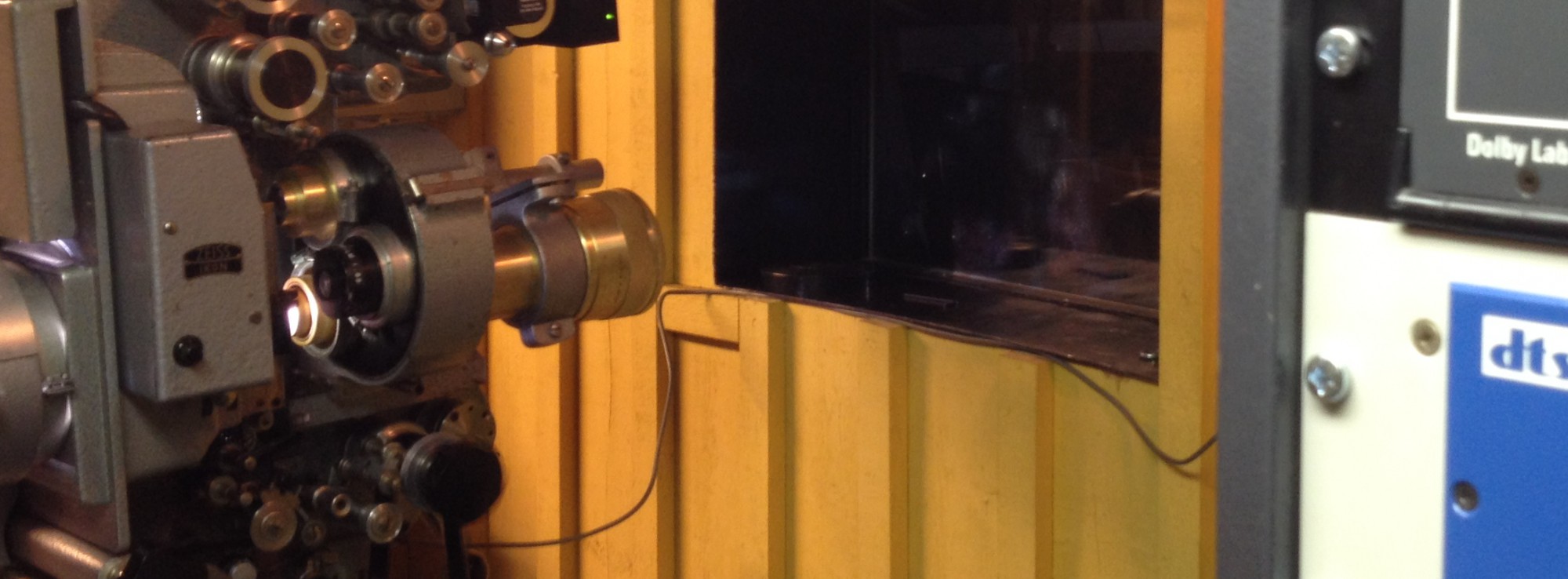
I’ve been busy writing my presentation and some example XML documents for my presentation on Automating Cinemas Using XML at XML Prague in about a week and a half. I’m slightly biased, I know, but I think the presentation actually does make a good case for XML-based automation of cinemas. I know how primitive today’s automation is, in spite of the many technological advances, and I know where to improve it. The question I’m pondering right now is how to explain the key points to a bunch of XML people who’ve probably never seen a projection booth, and do it in twenty minutes.

The opposite holds true, of course, if I ever want to sell my ideas to theatre owners. They know enough about the technology (I hope) but how on earth will I be able to explain what XML is?

There’s still have stuff to do (for one, it would be nice to finish the XSLT conversions required and be able to demonstrate those, live, at the conference) but the presentation itself is practically finished and the DTD and example documents are coming along nicely. I suppose I need to update the whitepaper accordingly and publish it here, when I’m done.

See you at XML Prague!